About Carbon Filtration System
Providing to the industry, Carbon Filtration System is considered ideal for liquid filtration. Based on technology of chemical adsorption, the system removes the impurities and contaminants from water. These equipments are specially used as essential option for air purification, water purification and industrial gas processing applications. Carbon Filtration System is the method of fine filtering that uses a bed of activated carbon. The bed of activated carbon works through the process of absorption for treating the pollutant molecules present in the fluid.
Features:
- Destroy hazardous material
- Odor abatement
- Removal of chlorine
Further Details:
-
PRESSURE SAND , MULTIGRADE & ACTIVATED CARBON FILTER SYSTEM
-
Various type of pressure sand Filter has with verity of graded sand, anthracite, cylex will gives the best filtered water.
-
Horizontal sand filter: Single and double compartment design gives best filtered water.
-
Vertical sand filter: Different type of graded media will improve quality of filter water.
-
High Quality activated carbon with higher iodine number gives quality result.
-
All Filters are designed based on suspended solid loading for best result.
Efficient Industrial Water PurificationThis activated carbon filtration system is tailored for demanding industrial settings. It efficiently removes chlorine, taste, and odor from water, delivering consistently purified results. Designed as a pretreatment for RO plants, it safeguards downstream systems and enhances overall water quality in manufacturing and processing facilities.
Durable Construction and Versatile InstallationManufactured from either mild steel (MS) or fiber-reinforced plastic (FRP), the system stands up to rigorous operating conditions. The floor-mounted design simplifies installation and maintenance. Its 2-inch BSP/NPT connections ensure compatibility with standard industrial piping, making it suitable for diverse water treatment setups.
Performance and ReliabilityBenefit from a robust flow rate of 3000 liters per hour, suitable for large-scale purification needs. Withstanding temperatures from 5C to 50C and pressures up to 3.5 kg/cm, this system guarantees reliable operation year-round. Periodic backwashing of the GAC medium ensures consistent filtration and long system life.
FAQs of Carbon Filtration System:
Q: How does the activated carbon filter remove chlorine, taste, and odor from industrial water?
A: The system uses granular activated carbon (GAC) to adsorb chlorine, organic compounds, and other contaminants, effectively removing unwanted taste and odor for high-quality water output.
Q: What is the process for maintaining the carbon filtration system?
A: Periodic backwashing is required to remove trapped impurities from the carbon bed, maintaining filtration efficiency and extending the lifespan of the system.
Q: When should I perform backwashing on the carbon filter?
A: Backwashing frequency depends on the level of contaminants and system usage, but it is typically recommended on a regular schedule as advised in the systems maintenance guide.
Q: Where is this carbon filtration system commonly installed?
A: It is floor-mounted and primarily used in industrial water treatment plants, especially as a pretreatment step before reverse osmosis units.
Q: What are the benefits of using a granular activated carbon (GAC) medium for filtration?
A: GAC provides excellent adsorption characteristics, enabling effective removal of chlorine, organic materials, taste, and odor, thereby improving water quality and protecting downstream equipment.
Q: How does the material of construction (MS/FRP) contribute to system durability?
A: Mild steel (MS) offers strength and durability, while fiber-reinforced plastic (FRP) resists corrosion, making the system long-lasting and suitable for various industrial environments.
Q: What applications is this carbon filtration system best suited for?
A: It excels in industrial water purification, pretreatment for RO plants, and any application requiring efficient removal of chlorine and organic impurities from large volumes of water.
 Call Us : 08045478059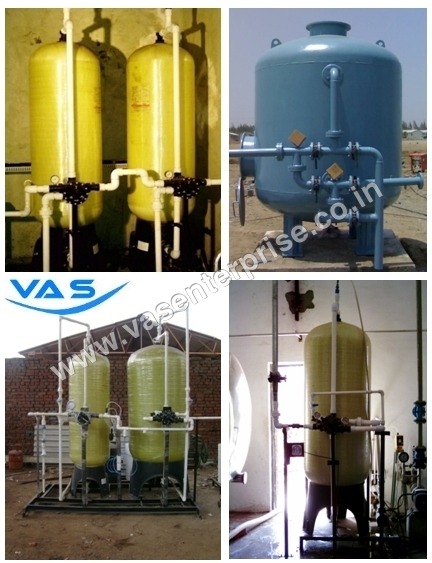






 Send Inquiry

 Send Inquiry
 Send Inquiry
 Send SMS